
Thermal profiling can sound like something only engineers care about, but it’s really about one simple goal: making sure your oven’s doing what you think it’s doing. In an industrial bakery, a small change in airflow or humidity can quietly shift color, texture, and bake time. Thermal profiling solutions for industrial bakery ovens in Brazil from Reading Thermal help you confirm what the oven environment looks like at product level during normal production. They help you tighten consistency without turning every adjustment into a guessing game.
What You’re Actually Measuring When You Profile
Most people start with temperature, and you should, but temperature alone won’t explain everything. A product can hit the same average temperature and still bake differently if airflow is uneven, humidity drops too fast, or energy transfer changes from one zone to the next.
A good thermal profiling approach captures the conditions that shape the bake from the outside in. You’re trying to understand what the product experiences across the full path through the oven, not just what one sensor near a wall happens to read. Once you can see that story clearly, it’s much easier to keep your bake steady from shift to shift.
How Reading Thermal’s SCORPION 2 Can Fit Your Line
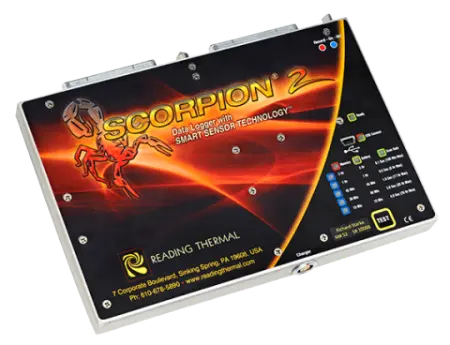
Reading Thermal’s SCORPION 2 Profiling System is built for commercial baking environments where you need real process data without a complicated setup. The SCORPION 2 Data Logger acts as the hub, collecting information from Smart Sensors as they travel through the process with the product.
Depending on what you’re trying to solve, you can connect tools like the Temperature Sensor Array to map conditions across the conveyor width, the Digital Air Velocity Sensor Array to see airflow patterns at product level, and the Digital Humidity Sensor to understand moisture conditions that affect crust and bite. If you’re chasing deeper questions about how energy is moving into the product, the Heat Flux Sensor can help you understand changes that temperature readings alone might not explain. You’re not locked into one approach, and you can build the setup around the problem you’re seeing.
What You’ll Learn From a Real Profiling Run
A profiling run doesn’t just confirm numbers, it highlights patterns. You might find that one side of the oven runs hotter, or that airflow spikes near an entrance and dries product earlier than expected. You might see humidity change faster than you assumed, which can impact shine, spread, and final texture. Sometimes you’ll learn that the oven’s mostly fine, and the real culprit is upstream consistency, which is still a win because you’re no longer guessing.
After the run, SCORPION Software SV8 helps you review and compare profiles so you can spot drift over time. That means you can treat great production conditions like a reference and check back against them when quality starts to slide.
How You’ll Make Profiling Part of Normal Quality Control
You don’t have to profile every day to get value from it. Many bakeries use it as a repeatable check after maintenance, during product changeovers, or when they’re ramping up a new item. It’s also helpful when you’re training new operators, because it gives them a clear picture of what “normal” looks like.
Please call Reading Thermal at (01) 610-678-5890 or use our online form to learn more about our thermal profiling solutions for industrial bakery ovens in Brazil.