
Determining how to validate the kill step in commercial baking is critical. You want proof that your bake does what your food safety plan says it does, consistently, even when the line is running fast and the plant is busy. Reading Thermal technology tools make it easier to capture time and temperature conditions in a practical way, so your validation work is based on evidence rather than assumptions.
What Kill Step Validation Really Means in Baking
A kill step validation is a process of confirming that your baking step consistently reaches the conditions required for your specific product and risk profile. Those conditions depend on the product type, the process and the internal controls in your plan. Even if two products use the same oven, they can behave differently because thickness, moisture, loading and line speed change how heat moves through the product. That’s why a good validation effort focuses on what happens in real production.
Why Setpoints Alone Aren’t Enough
An oven can show the same numbers every day while the bake experience still shifts. Belt loading changes. Door openings increase. A fan or damper behaves differently after maintenance. Exhaust settings drift. All of those factors can alter how heat transfers to the product, especially during critical parts of the bake.
When you rely only on setpoints, you’re trusting that the oven environment always matches what the display says. Validation asks for more than trust. It asks for confirmation. Capturing the real thermal profile helps close that gap.
How Reading Thermal Technology Supports Practical Validation
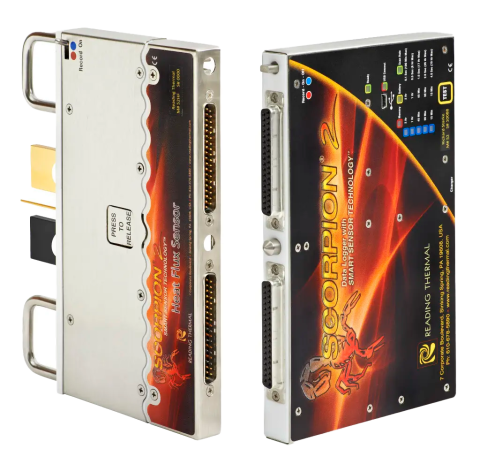
Reading Thermal offers solutions that help bakeries record temperature over time in a way that is easy to understand and document. Our SCORPION® 2 LITE Temperature Data Logger is a common starting point because it allows you to capture a full run instead of a momentary snapshot. That matters for kill step work because time is part of the equation, not just peak temperature.
Reading Thermal also supports profiling tools and systems that help you see how temperature behaves across the process path. Our SCORPION® 2 Profiling System can help you understand zone behavior, identify cooler areas and verify that changes in line speed or loading do not create hidden weak points. Instead of relying on one measurement, you can build a fuller picture of how your oven performs across typical production conditions.
The best part is that you don’t need to make it overly technical. You can run controlled checks, capture clear trend data and use those records to support your internal documentation.
Building Confidence Across Products and Changeovers
Validation is not only a one-time event. Over time, products change. Ingredients change, equipment gets serviced, and new workers receive training. A monitoring and profiling approach helps you verify that the validated conditions still hold when real life happens.
Reading Thermal tools can help you establish a baseline profile for a product that meets targets, then compare future runs against that baseline. If something shifts, you catch it early. That can reduce the risk of producing product outside your validated conditions, and it can also help you troubleshoot quickly if quality or safety questions come up.
We can help you determine how to validate the kill step in commercial baking in the most efficient, effective manner possible. Find out more by calling Reading Thermal at 610-678-5890 or contacting us online.