
Learning how to measure oven air velocity in industrial bakery ovens gives bakery teams a practical way to understand those hidden conditions. It doesn’t require turning every operator into an engineer. With the right profiling equipment, such as technology from Reading Thermal, and a consistent testing process, manufacturers can identify airflow differences and make informed adjustments that support better baking results.
Why Air Velocity Can’t Be Ignored
Air velocity describes how quickly air moves through the oven. In convection ovens, circulating air helps transfer heat to products as they travel through each zone. When that airflow isn’t balanced, products in one area of the conveyor may bake differently from products in another.
Uneven airflow can contribute to inconsistent browning, unexpected baking times, dry surfaces, or differences in firmness. A product near one side of the belt might receive more intense air movement, while one in the center doesn’t receive enough. Measuring air velocity helps reveal these variations before teams begin changing temperatures without understanding the actual problem.
What Temperature Readings Won’t Reveal
Temperature and air velocity work together, but they aren’t interchangeable. Two oven areas may show similar temperatures while delivering heat to products differently because the air is moving at different speeds.
That’s why checking the oven display won’t provide a complete picture of baking conditions. Manufacturers need measurements taken inside the oven near the product path. This approach shows what products actually experience rather than relying only on equipment settings.
Air velocity data can also help teams distinguish an airflow problem from a temperature problem. That distinction matters because increasing heat won’t necessarily correct poor circulation. It could create additional quality issues instead.
The SCORPION® 2 System Doesn’t Leave You Guessing
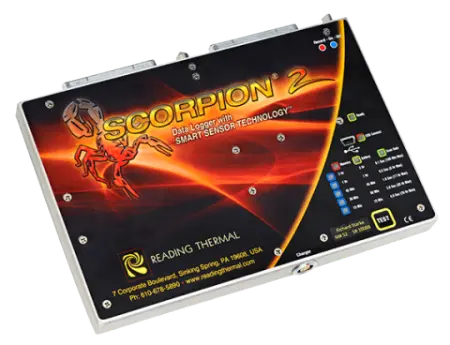
At Reading Thermal, we’ve designed the SCORPION® 2 Profiling System to travel through the process and collect information under actual operating conditions. The SCORPION® 2 Digital Air Velocity Sensor Array measures airflow patterns across the oven and records the information through the system’s Data Logger.
Before beginning a profile, the bakery should operate the oven under normal production conditions. The sensors can then move through the oven along the product path. Measurements should cover the width of the conveyor so the team isn’t seeing results from only one position.
The SCORPION® 2 Digital Temp+Airflow Sensor Array can simultaneously evaluate temperature and airflow across wide tray or grid conveyor ovens. That combined information makes it easier to understand how the two conditions interact throughout the baking process.
Reviewing the Results Doesn’t Need to Get Too Technical
Once the profile is complete, teams can review the recorded data for noticeable changes between the left, center, and right portions of the oven. They can also look for shifts between oven zones or differences from earlier profiles.
The goal isn’t to chase perfectly identical readings everywhere. Instead, teams should identify patterns that explain product inconsistencies. A sharp change may point to an airflow adjustment, blocked opening, fan issue, or another equipment condition that deserves attention.
After making an adjustment, another profile can confirm whether it improved airflow. This process helps manufacturers avoid relying on assumptions or making several changes at once.
Better Airflow Data Can’t Help But Improve Control
Measuring oven air velocity helps bakery teams connect oven performance with finished product quality. It can reveal airflow differences that temperature displays won’t show and provide a clearer direction for troubleshooting.
With the SCORPION® 2 Profiling System and our air velocity sensor options, we can help manufacturers evaluate actual oven conditions without making the process unnecessarily complicated. When teams know how air moves around their products, they’re better prepared to improve consistency, reduce waste and keep production running efficiently. Find out more about how to measure oven air velocity in industrial bakery ovens by using our online form or calling Reading Thermal at 610-678-5890.