
One of the most reliable methods of ensuring uniform heat distribution throughout an industrial baking oven is to obtain accurate data that shows exactly what’s happening inside that oven. Technology from Reading Thermal does exactly that. With the right measurements and a few practical habits, you can get much closer to a steady, repeatable bake.
Why Uniform Heat is Harder Than It Sounds
Industrial baking ovens are complex systems. Product load changes throughout the day. Changeovers shift belt speed and zone settings. Even routine maintenance can alter airflow in a way you do not notice right away.
Uniform heat isn’t only about the temperature setpoint. Air movement and energy transfer matter just as much. Two areas of the oven can display the same temperature and still bake differently if airflow is uneven or if heat is transferring to the product at different rates. That’s why the most reliable approach starts with measuring what the product actually experiences as it travels through the oven.
Start With a Clear Picture of Oven Conditions
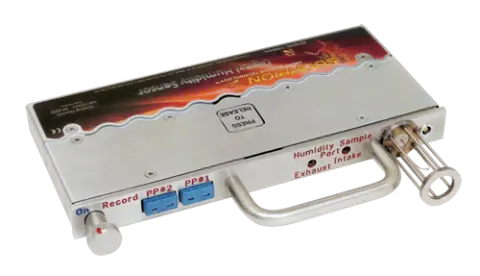
If you want uniformity, you need a map, not a guess. Profiling gives you that map. Reading Thermal’s SCORPION® 2 Profiling System is built to capture real conditions in real production. The SCORPION® 2 Data Logger travels through the oven with sensors and records data over time, zone by zone.
The Reading Thermal SCORPION® 2 Temperature Sensor Array is especially useful when you are focused on uniform heat distribution. Instead of taking one reading and hoping it represents the whole belt, you can measure across the width and identify hotter, and cooler regions. In practice, this is how you catch common issues like an operator side hot spot, a cooler center lane, or a zone that is lagging after changeovers.
Once the run is complete, our SCORPION® Software helps you review the profile and compare it to other runs. That comparison is where patterns become obvious and where troubleshooting gets faster.
Watch Airflow and Energy Transfer, Not Only Temperature
If your oven has stubborn variation, temperature readings may not be enough. Airflow often explains why one area bakes differently even when the thermometer looks similar. Changes in fan performance, ducting, damper settings, or leakage at the entrance can all shift how heat moves through the chamber.
Reading Thermal’s profiling approach can include air velocity and heat flux measurement. Air velocity tells you where air is moving faster or slower. Heat flux shows how strongly energy is being delivered to the product surface. Together, these measurements can help you understand why color is uneven, why a surface sets too early, or why texture changes across the belt.
When you pair these measurements with temperature mapping, you get a practical explanation instead of a hunch.
Make Uniformity Part of Changeovers and Maintenance
Uniform heat distribution is easier to maintain when you treat it like a routine, not a one-time fix. Profiling after major maintenance, burner tuning, fan replacement, or belt changes can help confirm the oven returned to a known good state. Profiling can also reduce waste during changeovers by showing whether the oven has truly stabilized before you run full production.
If you want support, Reading Thermal’s SCORPION® Profiling Service can help with on-site profiling and interpretation, which is often helpful when a line is under pressure and you need answers fast.
Learn how we can make ensuring uniform heat distribution throughout an industrial baking oven more reliable than you may have imagined possible by calling Reading Thermal at 610-678-5890 or using our online form.