
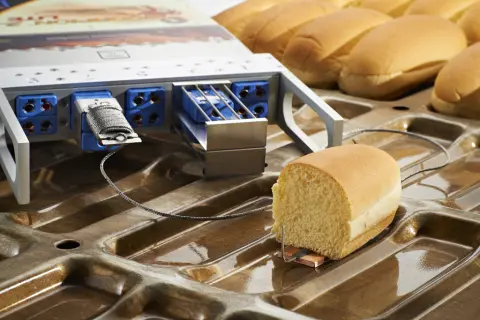
When choosing the best oven thermal profiling systems, you want a monitoring system that works across proofing, baking, and cooling, instead of three separate tools that never quite agree. That’s what you’ll get when you choose the SCORPION® 2 Profiling System from Reading Thermal. It helps you see temperature and humidity conditions along the full path your product takes, so you can catch drift early and keep consistency high.
Start With the Full Process Story
Before you compare products or features, start by mapping your process in plain terms. Where does the dough sit during proofing? How does it move into the oven? What happens between oven exit and packaging? The goal is to identify the points where temperature or humidity swings can change volume, crust, moisture loss, or shelf life.
A system that works across all three stages, such as our SCORPION® 2 Profiling System, should be able to follow that story. It should help you measure proofing conditions that influence fermentation and surface feel, baking conditions that drive color and structure, and cooling conditions that affect moisture migration and condensation risk.
Look for Temperature and Humidity Together
Across proofing and cooling, humidity matters almost as much as temperature. In proofing, humidity helps prevent skinning and supports consistent rise. In cooling, humidity and temperature balance can influence whether product sweats in a bag or dries out on a rack.
That is why it is smart to choose monitoring tools that capture both metrics, not just temperature. Reading Thermal offers data loggers and sensors that are well suited for this kind of work. If you can see both values over time, you stop guessing which part of the process caused the change.
Think About Mobility and Placement
Proofers, ovens and cooling areas are not always friendly environments for equipment. Proofing can be warm and humid. Ovens add heat and process complexity. Cooling zones might include airflow, open room conditions, or transitions near doors and docks.
So, you want a system that is flexible. It should be easy to place loggers where they matter, move them between areas and run the same style of check in different parts of the plant. Reading Thermal monitoring tools are designed around that practical placement idea, helping teams capture conditions without turning the process into a major project.
Choose Data That Helps You Make Decisions
It’s easy to buy a system that gives you a lot of data, but it can be difficult to buy a system that gives you the right data. For cross-process monitoring, you want trends you can interpret quickly. You want to see when conditions drift, how long the drift lasted and whether it lined up with a shift change, a door opening pattern, a line stop, or a seasonal change in ambient air.
You also want repeatability. If you run the same product next week, can you compare the curves and confirm the process stayed stable? That’s where Reading Thermal tools can support a simple baseline program that keeps everyone aligned.
Choosing the best oven thermal profiling systems means choosing products that offer monitoring you can deploy in multiple areas, with one workflow that helps your team compare runs and spot drift early. Reading Thermal products fit this goal. Find out more about how by calling 610-678-5890 or contacting us online.