
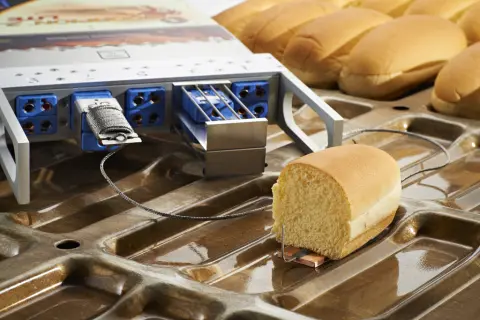
Baking zone analysis using thermal profiling systems in industrial bakery ovens is more reliable than ever, as long as you use products from Reading Thermal. Our technology helps you see what each zone is truly doing at product level. Instead of adjusting settings based on a hunch, you’ll measure how heat behaves through the full bake and make targeted changes that protect quality and throughput.
Why Zone Setpoints Don’t Always Tell the Truth
A zone setpoint is a goal, not a guarantee. Fans wear, dampers move slightly, and airflow paths change over time. Loading patterns can also affect performance, especially when product density varies across the belt. Even small changes in belt speed can alter how long the product sits in each zone, which changes the bake even when temperatures look stable.
When you rely on visual checks, you’re usually seeing the end result. Zone analysis helps you work backward and identify where the bake started to drift. That’s important because the first zone that behaves differently often triggers problems you don’t notice until later.
What Baking Zone Analysis Looks Like in Practice
Zone analysis starts with a simple idea. You run a profiling pass that travels through the oven during normal production, and you capture the conditions through time. Then you compare what you measured to what you expected each zone to deliver.
You’re looking for patterns that match the defects you’re seeing. If the product’s coming out too dark, you might find an early zone running hotter than expected. If the center stays underbaked, a middle zone might be lagging or recovering too slowly after load changes. If edges are drying out, airflow behavior around the product might be the driver even if average temperature looks fine.
This approach turns a vague complaint into a clear question. Which zone is doing too much, and which zone isn’t doing enough?
How Reading Thermal’s SCORPION 2 Supports Zone-Level Insight
Reading Thermal’s SCORPION 2 Profiling System is designed to collect process data as it moves through baking, drying, or cooling operations. The SCORPION 2 Data Logger travels with the profiling setup and records the readings so you can review them after the run.
For baking zone analysis, a Temperature Sensor Array can help you see how heat behaves across the conveyor width, which is useful when one side of the oven browns faster than the other. If you suspect airflow is creating uneven results, the Digital Air Velocity Sensor Array can help reveal where air movement is stronger or weaker than you assumed. When moisture behavior is part of the story, the Digital Humidity Sensor can help you understand why a product’s surface is setting too fast or staying too wet longer than expected.
You don’t have to start with every measurement. Many teams begin with temperature mapping, then add airflow or humidity measurements when the data suggests there’s more going on than a simple temperature drift.
Find Out More
Baking zone analysis using thermal profiling systems in industrial bakery ovens gets easier when you can see what the oven is delivering instead of assuming setpoints equal results. A thermal profiling system helps you identify which zones are drifting, how heat behaves across the belt, and where the bake starts to move off target. With Reading Thermal products, you can turn zone adjustments into confident decisions that protect product quality and keep production running smoothly. Call 610-678-5890 or use our online contact form to connect with one of our experts.